
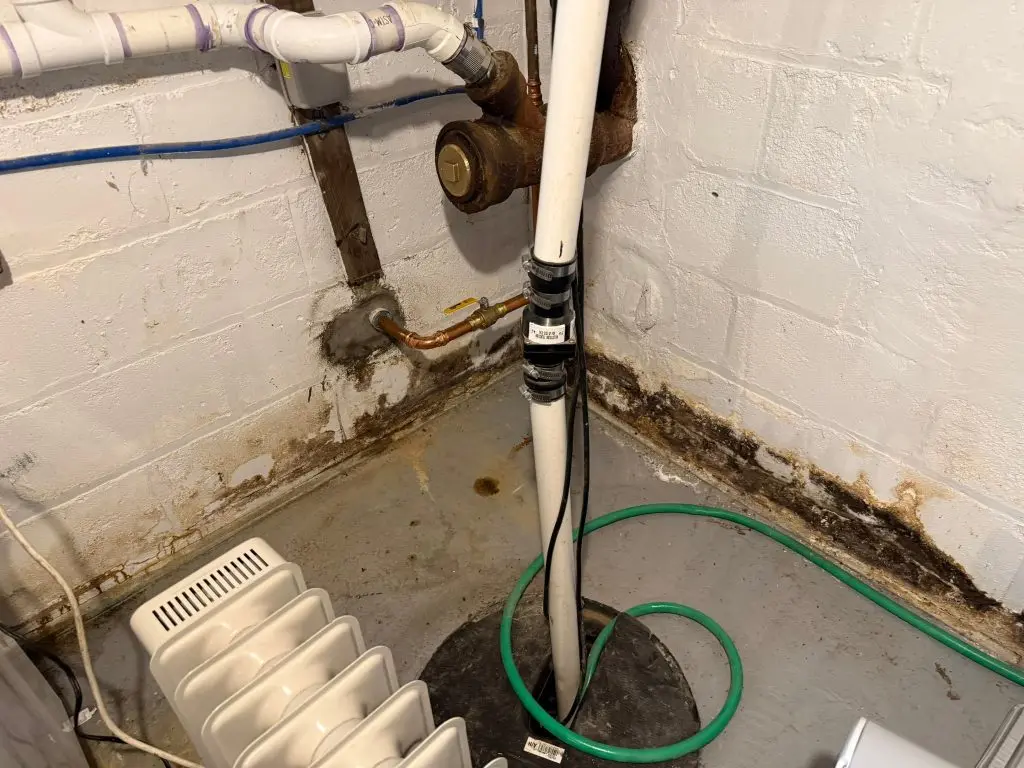
For New Jersey homeowners, dealing with a damp or flooded basement is practically a rite of passage. Between the high water tables in coastal areas like Ocean and Monmouth Counties, heavy seasonal downpours, and clay-heavy soils that trap water against foundation walls, hydrostatic pressure is constantly working against your home. If you have noticed water pooling on your concrete slab or seeping through wall cracks, you are likely looking into two of the most popular solutions: French drains and sump pumps.
While many people use these terms interchangeably, they are actually two completely distinct components of a professional basement waterproofing system. Choosing the wrong one can leave your basement vulnerable to water damage, mold, and structural rot. Let’s break down how each system works, how they differ, and why they work best as a unified, high-performance defense team.
The Wet Basement Dilemma: Understanding Hydrostatic Pressure
Before choosing a waterproofing system, it helps to understand why your New Jersey basement gets wet in the first place. When heavy rain falls or winter snow melts, the soil surrounding your foundation becomes saturated. This trapped water creates an immense downward and inward force known as hydrostatic pressure.
Concrete is naturally porous, and under hydrostatic pressure, water is easily forced through microscopic pores, hairline foundation cracks, and—most commonly—the “cove joint” (the gap where your basement floor meets the foundation wall). To stop this, you must give the water a path of least resistance that directs it away from your living space.
What is an Interior French Drain? (The Water Collector)
An interior French drain is a sub-floor drainage system designed to capture rising groundwater before it ever touches your basement floor.
How It Works: Channelling Sub-Slab Water
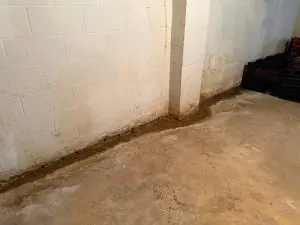
To install an interior French drain, professional waterproofing technicians jackhammer a trench around the interior perimeter of your basement floor. They lay a perforated drainage pipe inside this trench and surround it with clean filtration gravel. The trench is then capped with fresh concrete, leaving only a small, invisible gap along the wall-floor joint. When groundwater rises, it enters the perforated pipe and is channelled safely beneath your floor toward a central collection point.
When is an Interior French Drain is the Best Choice
- You have water seeping in through the cove joint along multiple walls.
- You notice water weeping through block foundation walls.
- Your basement floor has multiple damp spots or active leaks during heavy rains.
- You are planning to finish your basement and need 100% reliable, long-term moisture protection.
What is a Sump Pump? (The Water Discharger)
If a French drain is the collection network, the sump pump is the engine that drives the water completely out of your home.
How It Works: Active Water Removal
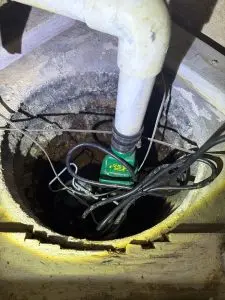
A sump pump sits inside a heavy-duty basin (or sump pit) carved into the lowest point of your basement floor. As water fills the basin, a float switch rises. Once the water reaches a designated level, the pump automatically turns on, pumping the water up and out of your basement through a discharge pipe. The water is carried several feet away from your home, ensuring it cannot immediately seep back down toward your foundation.
Why a Sump Pump Alone Isn’t Always Enough
A standalone sump pump is excellent for managing water that accumulates in one specific low spot of your basement. However, it cannot pull water from the opposite side of the room. If you have water coming through walls or joints far away from your sump pit, a standalone pump won’t prevent those areas from flooding. It needs a drainage system to bring the water to it.
The Dynamic Duo: Why They Work Best Together
In almost all professional, high-ticket basement waterproofing projects in New Jersey, an interior French drain and a sump pump are installed together as a complete, closed-loop system.
The French drain collects the perimeter moisture and channels it beneath the floor slab directly to the sump pump basin. The sump pump then forcefully ejects that water out of your home. Without the French drain, the sump pump only protects its immediate vicinity. Without the sump pump, the French drain would simply flood your basement floor once the underground pipes filled with water. Together, they offer a lifetime of reliable dry-floor performance.
NJ Basement Waterproofing FAQs
Can I install a sump pump without a French drain system?
Yes, you can install a standalone sump pump if water only pools in one specific, localized low spot of your basement. However, if water is seeping through the walls or rising up through floor cracks across the entire perimeter, a sump pump alone won’t solve the problem; you need a French drain to channel that water to the pump.
How long does it take to install an interior French drain system?
For a standard-sized residential basement in New Jersey, a professional interior French drain installation typically takes between 2 and 4 days. This includes jackhammering the concrete slab perimeter, laying the pipe, backfilling with gravel, installing the sump basin, and repouring the concrete to leave your basement neat and tidy.
Does homeowners’ insurance cover basement waterproofing costs in NJ?
Standard homeowners insurance policies generally do not cover preventative basement waterproofing or damage caused by rising groundwater. They typically only cover sudden, accidental water damage, such as a burst pipe. This makes proactive waterproofing a critical investment in protecting your home’s structure and overall equity.
Protect Your Basement with Healthy Way
Don’t wait for the next major storm to find out if your basement defenses are up to par. If your basement is damp, smelling musty, or actively taking on water, let our local team design a custom waterproofing system tailored to your home’s unique layout and foundation. Contact Healthy Way today to secure your home. Book Your Free Waterproofing Estimate Today.