
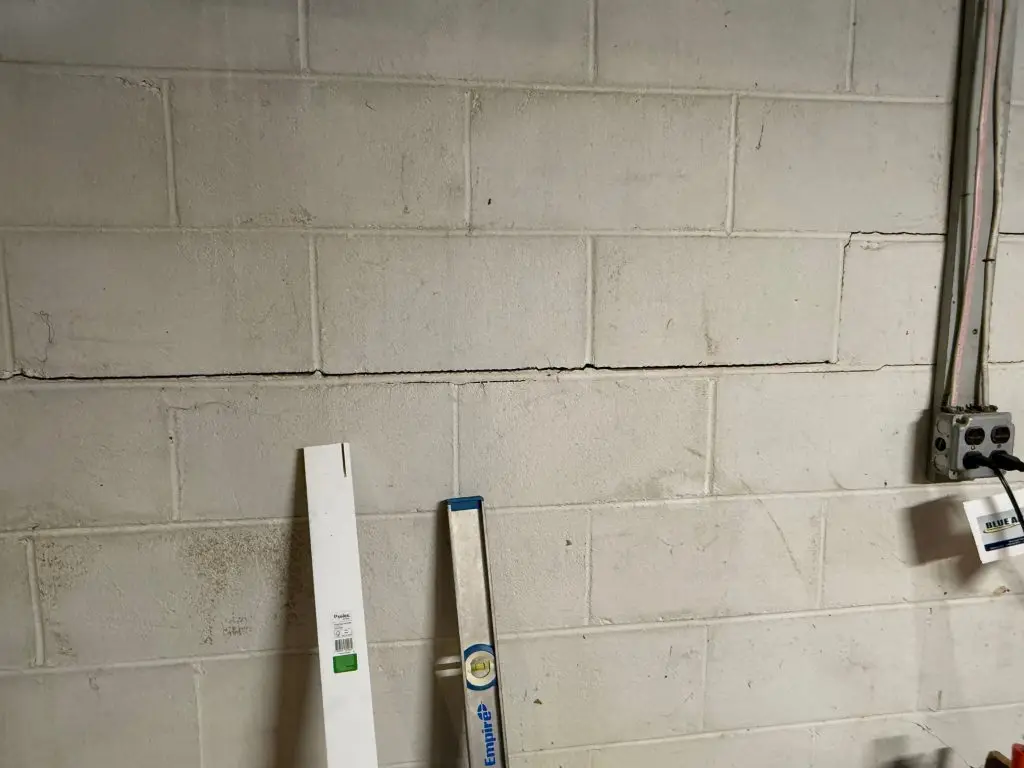
Discovering a crack in your basement wall or foundation is a stressful moment for any New Jersey homeowner. Your mind immediately jumps to worst-case scenarios: structural failure, crumbling walls, and astronomical repair bills. However, not all foundation cracks are created equal. Some are simply minor cosmetic blemishes caused by concrete naturally shrinking as it cures, while others are serious warning signs of structural settlement or bowing walls.
Understanding which cracks require urgent attention and how professional foundation repair specialists fix them can save you thousands of dollars in secondary water damage and structural degradation. Let’s look at the science behind foundation movement and how to address these issues permanently.
Concrete Shrinkage vs. Structural Settlement: Spotting the Difference
Because concrete is a mixture of water, cement, and aggregate, it naturally loses volume and shrinks slightly as it dries. This natural curing process is the primary cause of minor hairline cracks. On the other hand, structural cracks are caused by external forces—such as soil movement, hydrostatic pressure, and improper drainage—actively pulling or pushing against your home’s foundation.
The Warning Signs: Decoding Your Basement Wall Cracks
You can often determine the severity of a crack simply by analyzing its direction, location, and width:
1. Hairline and Vertical Cracks (Low to Moderate Risk)
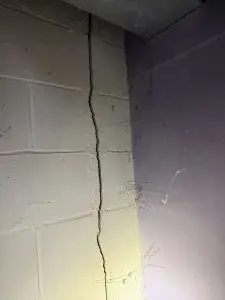
Vertical cracks (running straight up and down) are incredibly common in poured concrete basements in NJ. They usually occur within the first few years of construction due to concrete shrinkage. While they rarely pose a structural threat, they are prime pathways for groundwater infiltration during heavy rainstorms and should still be sealed to prevent basement flooding.
2. Diagonal Cracks (Moderate Risk)
Diagonal cracks that run at roughly a 30- to 45-degree angle often indicate differential settlement. This happens when one part of your home’s foundation is sinking faster than the rest. This is common in areas with uneven soil density, poor soil compaction, or localized drainage issues (like a clogged gutter dumping water directly next to one corner of the foundation).
3. Horizontal and Stair-Step Cracks (High Risk — Structural Emergency)
If you see horizontal cracks running along your basement walls or stair-step cracks weaving through the mortar joints of a concrete block foundation, you have a structural issue. These cracks are caused by hydrostatic pressure—saturated, heavy soils pressing inward against your foundation. Left untreated, the wall will begin to bow inward, eventually leading to catastrophic structural failure.
Professional Foundation Crack Repair Methods
Depending on the cause and severity of the crack, professional foundation repair specialists utilize specific, engineered solutions:
Polyurethane and Epoxy Crack Injections
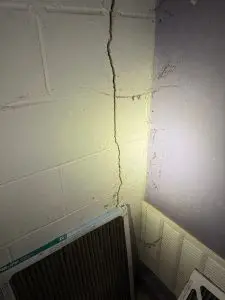
For non-structural, leaking vertical cracks, technicians use low-pressure polyurethane or epoxy injections. This process seals the crack from the inside out, penetrating deep into the foundation wall. Polyurethane remains flexible as the concrete expands and contracts with seasonal temperature changes, keeping water out permanently.
Carbon Fiber Wall Reinforcement
For walls that have begun to bow or crack horizontally due to external soil pressure, carbon fiber straps are the premier solution. These lightweight, incredibly strong straps are bonded directly to the basement wall using heavy-duty epoxy. As shown in the diagram above, the straps are secured with heavy anchors at the top and bottom, redistributing the soil pressure and preventing the wall from moving or bowing further.
Helical and Push Piers (Underpinning)
If your home is actively settling or sinking, technicians must stabilize the foundation from below. Underpinning involves driving steel piers deep into the ground until they reach load-bearing bedrock or stable soil. The weight of your home is then transferred onto these piers, halting further settlement and sometimes even lifting the foundation back to its original level.
Foundation Crack Repair FAQs
Are vertical cracks in a poured concrete basement wall dangerous?
Vertical cracks are typically caused by concrete shrinkage and rarely threaten the structural integrity of your home. However, because they extend all the way through the foundation wall, they are highly prone to leaking groundwater and should be sealed using professional injections to prevent mold and water damage.
What causes diagonal or stair-step cracks in block foundations?
Stair-step cracks along mortar joints usually point to differential settlement—meaning one corner of your home’s foundation is sinking faster than the rest due to shifting soils, poor compaction, or drainage issues. These require professional structural evaluation.
Can a homeowner repair structural foundation cracks themselves?
No. DIY crack kits from home improvement stores only seal the surface. They do not address the active soil pressures or settling issues causing the crack in the first place. If the house continues to shift, the surface-level patch will crack and fail immediately.
Secure Your Home’s Foundation Today
A small crack today can turn into a major structural failure tomorrow. Protect your family’s safety and your home’s long-term resale value by addressing foundation issues early. Contact Healthy Way today to schedule a comprehensive, professional inspection and secure your home with guaranteed structural solutions. Book Your Free Foundation Evaluation Now.