
Finding a patch of dark, fuzzy growth in your basement is enough to make any homeowner shudder. In New Jersey, our hot, humid summers combined with cold, damp winters create the perfect breeding ground for mold. If you spot a musty corner, your first instinct might be to grab a bottle of household bleach, throw on some gloves, and start scrubbing. It seems like the easiest, cheapest way to solve the problem.
However, when it comes to basement mold, relying on bleach is a major mistake. It doesn’t actually kill the mold roots on porous surfaces, and it can even make the problem worse. Let’s look at why DIY bleach treatments fail and how professional mold remediation keeps your New Jersey home healthy and safe.

The Great Myth: Why Bleach Fails on Porous Basement Surfaces
The main reason bleach fails on basement mold comes down to simple chemistry. Household bleach (sodium hypochlorite) is highly effective at killing mold on non-porous surfaces like tile, glass, and metal. However, basement walls and floors are typically made of concrete, brick, drywall, or wood—all of which are highly porous.
Bleach is composed of roughly 90% water. When you spray bleach onto a porous surface like concrete, the chlorine chemical cannot penetrate the tight microscopic pores; it remains on the surface. Meanwhile, the water portion of the bleach sinks deep into the material. The surface mold might change color and look “clean,” but the root system (called hyphae) deep within the concrete survives. Even worse, those roots now have a fresh supply of water to feed on, prompting the mold to return faster and stronger than before.
Health Symptoms and Property Risks Associated with Basement Mold
Ignoring a mold problem or trying to mask it with quick fixes can lead to serious consequences. Airborne mold spores circulate throughout your home due to the “stack effect,” where air from your lower levels naturally rises into your living spaces.
Exposure to basement mold can trigger a range of respiratory issues, including persistent coughing, nasal congestion, throat irritation, and skin rashes. It is particularly dangerous for family members with asthma or weakened immune systems. Beyond health concerns, active mold digests organic materials like wooden floor joists, drywall paper, and carpeting, gradually weakening your home’s structural framing.
The EPA 10-Square-Foot Rule: When to Call the Pros
How do you know when a mold issue has grown beyond a simple DIY cleanup? The Environmental Protection Agency (EPA) provides a clear guideline: if the mold cover is less than 10 square feet (roughly a 3-foot by 3-foot patch), you can usually clean it yourself using specialized, non-bleach antimicrobials. However, if the mold coverage exceeds 10 square feet, or if you suspect it has spread inside your wall cavities or HVAC system, it is time to call a certified professional.
The Professional Mold Remediation Protocol: What Actually Happens
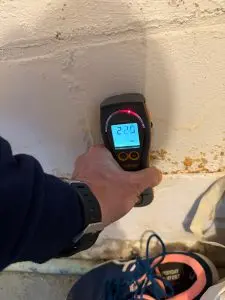
Certified remediation specialists do not just spray chemicals and leave. They follow a rigorous, step-by-step containment and cleaning protocol designed to eliminate the mold safely without spreading spores to the rest of your house:
- Containment: Technicians seal off the workspace using heavy-duty plastic sheeting and set up negative air pressure systems.
- Air Filtration: Commercial-grade HEPA air scrubbers run continuously to capture airborne spores and prevent them from migrating upstairs.
- Source Removal: Non-porous materials are deeply scrubbed with professional-grade, EPA-registered fungicides, while heavily infested porous materials (like moldy drywall or carpet) are carefully bagged and removed.
- HEPA Vacuuming: All surfaces are vacuumed with specialized HEPA filtration equipment to capture microscopic residues.
Basement Mold Remediation FAQs for New Jersey Homeowners
Is bleach effective for basement mold removal in New Jersey?
Bleach may remove surface staining on some non-porous materials, but basement mold often develops on porous materials such as concrete, drywall, wood, and insulation. If mold keeps returning after cleaning, the underlying moisture problem and contaminated materials may need to be professionally evaluated.
For New Jersey homes with recurring basement mold, musty odors, water intrusion, or high humidity, a professional mold assessment can help determine the extent of the problem and the appropriate remediation approach.
When should I call a professional for basement mold remediation in NJ?
The EPA states that homeowners can often handle mold growth covering less than approximately 10 square feet themselves. Larger contaminated areas, significant water damage, hidden mold, or suspected contamination inside walls or HVAC components may require professional assistance.
New Jersey homeowners should also consider professional mold remediation when mold repeatedly returns, the basement has experienced flooding or foundation leaks, or the source of moisture is difficult to identify.
Why does basement mold keep coming back after I clean it?
Recurring basement mold usually indicates that excess moisture is still present. Common basement moisture problems can include foundation seepage, plumbing leaks, condensation, high indoor humidity, inadequate drainage, or previous water damage.
Removing visible mold without correcting the moisture source may only provide a temporary solution. Effective basement mold remediation should address both the contamination and the conditions allowing mold to grow.
Can HealthyWay help with both basement mold and moisture problems in New Jersey?
Yes. HealthyWay Waterproofing & Mold Remediation provides mold remediation and moisture-control solutions for New Jersey properties. Because basement mold and water intrusion are often connected, identifying the source of moisture is an important part of developing a long-term solution.
HealthyWay also provides basement waterproofing, crawl space services, foundation repair, and sump pump solutions when those services are appropriate for the property.
What areas of New Jersey does HealthyWay serve?
HealthyWay provides mold remediation and basement moisture solutions for homeowners throughout its New Jersey service area, with locations in Middletown Township and Parsippany.
If you are experiencing visible basement mold, musty odors, recurring dampness, or water intrusion, contact HealthyWay to confirm service availability for your New Jersey property and schedule an assessment.
Stop Recurring Basement Mold at the Source
Cleaning the visible growth is only part of solving a basement mold problem. If moisture continues entering your basement through humidity, leaks, seepage, or other water-related conditions, mold can return.
HealthyWay Waterproofing & Mold Remediation helps New Jersey homeowners identify mold contamination and the moisture conditions contributing to it. From professional mold remediation to basement waterproofing and moisture-control solutions, the goal is to address the problem beyond what a bottle of bleach can accomplish.
If you have discovered mold, persistent musty odors, or signs of moisture in your basement, get the problem evaluated before it spreads into additional materials or hidden areas of the home.
Need basement mold remediation in New Jersey?
Contact HealthyWay Waterproofing & Mold Remediation to discuss your basement and request a professional assessment.