
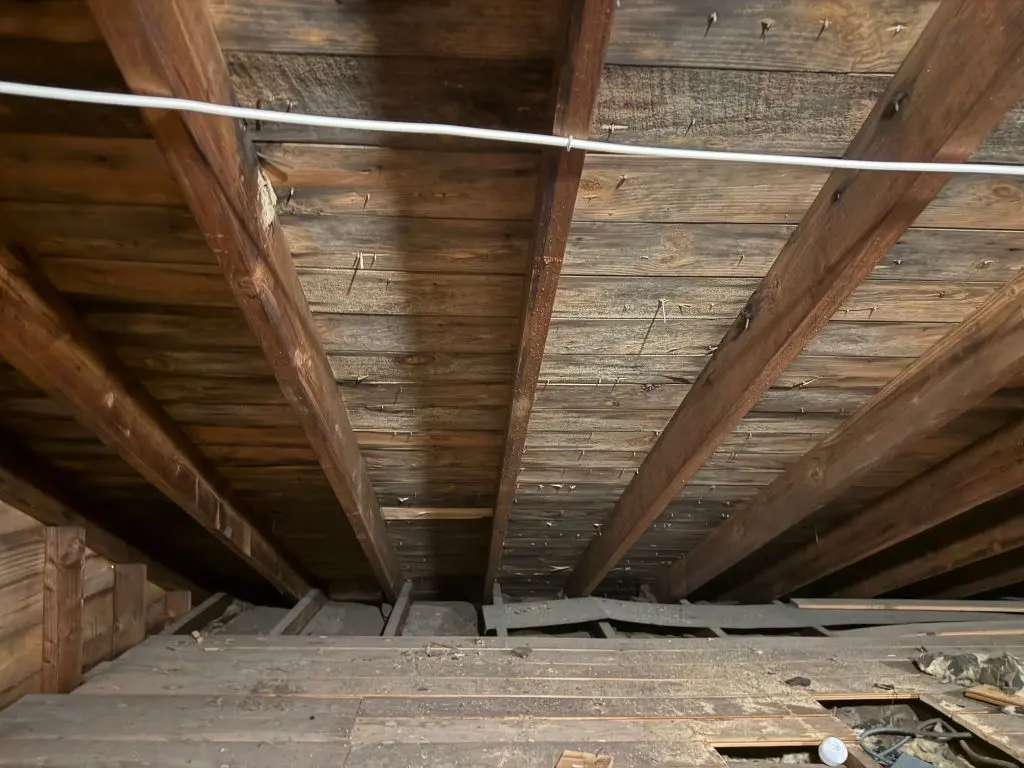
If walking across your living room feels like bouncing on a trampoline, or if you’ve noticed your favorite cabinets gently swaying when someone jogs past, your home is sending you a structural warning. Bouncy, soft, or sagging floors are not just a harmless quirk of an aging home. In New Jersey, where humid summers and damp winters dominate, these symptoms are almost always linked to structural issues hidden right beneath your feet: compromised crawl space floor joists.
When moisture is left unchecked in a crawl space, it slowly eats away at the wooden framing supporting your first floor. Addressing this issue requires a dual-pronged strategy: stabilizing the physical structure with heavy-duty crawl space support jacks and stopping the root cause of the damage through professional crawl space encapsulation.
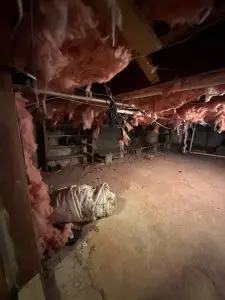
The Connection Between Soft First Floors and Crawl Space Moisture
Your home’s first floor relies on a grid of horizontal wooden beams called floor joists, which are supported by a central girder and concrete foundation walls. Because crawl spaces sit directly on the raw earth, they are incredibly susceptible to rising ground dampness and outdoor humidity.
When relative humidity in your crawl space stays between 50% and 60%, the wooden floor joists absorb this airborne moisture like a sponge. Wood that remains damp is highly vulnerable to wood-decaying fungi (wood rot). As the fibers of the wood soften, crack, and rot, they lose their rigidity. Unable to support the heavy weight of the furniture, flooring, and foot traffic above, the joists begin to sag, twist, and flex, leading to that unsettling “bouncy” sensation in your living areas.
Warning Signs Your Crawl Space Has Structural Integrity Issues
Before your floors sag to a dangerous degree, your home will display several progressive warning signs that your crawl space framing is failing:
- Sloping or Uneven Floors: You might notice a visible dip in the center of a room or along the path of a main hallway.
- Baseboard Gaps: A growing gap between the bottom of your baseboard molding and your hardwood, tile, or carpeted floor.
- Sticking Doors and Windows: As the sub-floor framing sags, it pulls door frames and window openings out of alignment, making them difficult to open, close, or latch.
- Musty Odors: That damp, earthy smell rising from your floorboards is a direct indicator of active mold growth and wood rot in the crawl space below.
The Two-Step Solution: Structural Repair + Crawl Space Encapsulation
Simply spraying wood hardener or ignoring the moisture while adding cosmetic floor leveling compound will not solve the underlying structural threat. A permanent fix requires two distinct steps:
Step 1: Installing Heavy-Duty Crawl Space Support Jacks
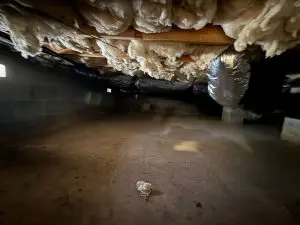
To restore your sagging floors, structural technicians install adjustable steel support jacks beneath your floor joists. Unlike concrete blocks or wooden shims, these engineered steel columns are anchored to solid concrete footings poured on the crawl space floor. Over time, these jacks are carefully tightened to lift and stabilize the sagging beams, gently pushing your floors back toward their original level plane and transferring the load-bearing weight safely to the earth.
Step 2: Sealing Out the Humidity with Full Encapsulation
Stabilizing the framing is only half the battle. If you do not eliminate the moisture, your newly repaired joists will eventually rot again. Crawl space encapsulation is the ultimate moisture control solution. This involves:
- Laying a heavy-duty, multi-ply vapor barrier (typically 12-mil to 20-mil thick) across the entire dirt floor and sealing it up to the foundation walls.
- Seal off all drafty foundation vents that let humid, summer outdoor air inside.
- Installing a commercial-grade crawl space dehumidifier to actively keep the relative humidity below 50%.
Why Vented Crawl Spaces Fail the NJ Climate Test
For decades, building codes required crawl spaces to have open foundation vents to “air out” moisture. However, building science has proven this method counterproductive, especially in New Jersey. In the summer, warm, humid air flows through the vents and hits the cool air under your home. This temperature drop causes the moisture in the air to condense into liquid water droplets on your wooden joists, concrete walls, and fiberglass insulation. Encapsulation seals out this humid ambient air, keeping your crawl space dry, clean, and stable year-round.
Crawl Space Structural Repair FAQs
How do support jacks fix sagging floors over a crawl space?
Heavy-duty, adjustable steel support jacks are placed directly beneath your compromised floor joists or central girder. These jacks sit on engineered concrete footings. Technicians carefully tension and adjust the jacks over time to stabilize the structure, lift the sag, and permanently hold your first floor level.
Can I just replace rotten crawl space joists without encapsulating?
You can replace the wood, but it is a temporary band-aid. If you replace rotten joists without resolving the high relative humidity, standing water, or condensation issues in the crawl space, the new wood will absorb the same moisture and begin to rot, warp, and attract wood-boring pests just like the old wood did.
How long does crawl space encapsulation last?
When installed by certified professionals using high-durability, tear-resistant vapor barriers and professional-grade self-draining dehumidifiers, an encapsulated crawl space will easily last 20 years or more with basic, annual system inspections.
Stop Bouncy Floors at the Source with Crawl Space Repair in NJ
Bouncy, sagging, or uneven floors are more than an inconvenience—they can be a warning that moisture is weakening the floor joists and structural framing beneath your home. Addressing the floor without correcting the damp crawl space below may leave the underlying problem unresolved.
A comprehensive solution combines structural stabilization with long-term moisture control. Support jacks can help stabilize compromised floor joists and beams, while crawl space encapsulation and dehumidification help create a drier environment that protects the wood from continued moisture exposure.
If you have noticed soft floors, sticking doors, musty odors, visible wood deterioration, or other signs of crawl space trouble, Healthy Way can evaluate the conditions beneath your home and recommend an appropriate repair strategy.
Protect your home from the ground up. Contact Healthy Way today to schedule your free crawl space evaluation and learn whether structural repair, moisture control, or a combination of both is right for your New Jersey home.