
When homeowners in Holmdel, Monmouth County, invest in custom properties, the last thing they expect is to walk downstairs and find standing water pooling across the floor or notice concrete walls shifting inward. Unfortunately, New Jersey’s unique environmental makeup—characterized by dense clay-heavy soils, fluctuating water tables, and intense seasonal storms—creates immense underground stress. Recently, our team at HealthyWay Waterproofing & Mold Remediation stepped in to resolve a complex structural and moisture intrusion challenge for a local Holmdel residence.
This case study explores how we combined advanced interior drainage systems, high-performance wall membranes, and structural steel reinforcement to permanently secure a residential basement against both water and pressure.
The Challenge: Water Seepage Meets Lateral Wall Pressure in Monmouth County
The homeowners originally reached out to HealthyWay after noticing a damp, earthy odor that wouldn’t clear up, followed by visible water seeping through the cove joints (where the wall meets the floor) during heavy rainstorms. Upon conducting a comprehensive foundation inspection, our certified technicians uncovered a far more serious underlying issue: hydrostatic pressure had begun pushing against the western foundation wall, causing visible bowing and horizontal cracking.
In many upscale Holmdel neighborhoods, property landscaping and natural slope configurations can trap subsurface water directly against concrete block foundations. As soil absorbs heavy rainfall, it expands violently. Without proper exterior relief or internal structural support, basement walls begin to deflect inward—threatening the stability of the entire home above.
The Engineered Solution: A Multi-Layered Defense
A standard paint-on waterproof coating or a basic surface patch would have been entirely inadequate for this level of stress. To deliver a permanent fix, our team designed a comprehensive restoration and waterproofing strategy addressing both structural integrity and moisture control.
1. Interior Perimeter Drainage System
To stop water seepage at the source, we installed a high-capacity sub-floor drainage network. We carefully cut and excavated a narrow trench along the perimeter slab, laying down washed gravel and perforated drainage pipe to capture water before it could ever reach the surface. This system safely routes incoming water directly into an upgraded, battery-backed sump pump system.
2. Dimpled Drainage Wall Membrane
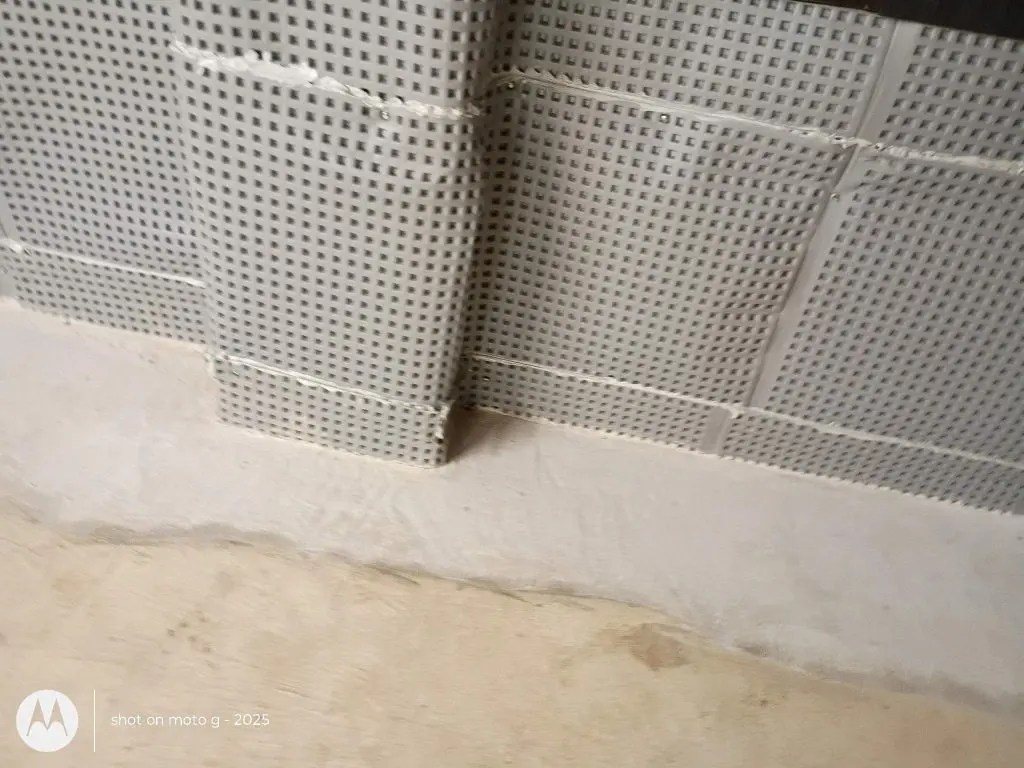
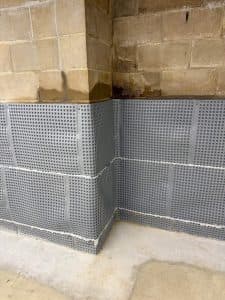
Rather than trapping moisture behind the concrete block wall—which can worsen structural decay—we installed a heavy-duty, dimpled polyethylene drainage membrane along the foundation walls. This creates a specialized air gap that allows wall moisture and condensation to harmlessly trickle downward into the interior French drain below, keeping the living space completely dry.
3. Steel I-Beam Wall Braces
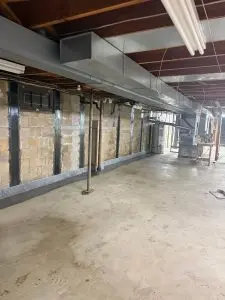
To counteract the dangerous lateral pressure causing the wall to bow, we anchored heavy-duty structural steel I-beams directly into the foundation floor and secured them to the overhead floor joists. These industrial-grade braces permanently lock the bowing foundation wall into place, halting any further inward movement and protecting the home’s structural load.
Restoring the Foundation Slab
Once the drainage channels and structural I-beams were securely in place, our crews repoured and smoothed industrial-grade concrete over the perimeter trench. We meticulously matched the new floor patch to the surrounding slab, leaving the basement clean, uniform, and structurally sound, ready for any future finishing work or storage needs.
Frequently Asked Questions (FAQs)
Q: How do steel I-beams correct a bowing basement wall?
A: Steel I-beams are bolted to the floor joists and foundation floor to anchor the wall securely against lateral soil pressure. While they may not push a severely bowed wall back to plumb instantly, they permanently halt any further movement and stabilize the structure for the lifetime of the home.
Q: What is the purpose of a dimpled drainage membrane?
A: The dimpled polyethylene sheet creates a vital air gap against rough concrete or masonry. It allows moisture and minor wall weeping to channel downward into the interior French drain without saturating drywall or framing materials.
Q: Will the concrete floor patch match my existing basement floor?
A: Yes. Professional technicians carefully pour, level, and smooth high-strength concrete over the perimeter trench to ensure a clean, seamless finish that integrates perfectly with your existing basement slab.
Secure Your Holmdel Home Today
Noticing wall cracks, bowing masonry, or water seepage in your Holmdel property? Don’t leave your home’s structural safety to chance. Trust the local structural and waterproofing specialists at HealthyWay.
Ready to protect your investment? Contact HealthyWay today to schedule your comprehensive basement and foundation evaluation across Central and Northern New Jersey!