A leaking basement in New Jersey is rarely something homeowners should ignore. Heavy rain, saturated soil, groundwater, aging foundations, and drainage problems can all contribute to water entering through basement walls, floor cracks, or the joint where the wall meets the floor.
These problems can affect homes throughout New Jersey, from coastal communities in Monmouth and Ocean counties to properties farther north in Morris, Bergen, Passaic, and Sussex counties.
When basement water keeps returning, homeowners typically encounter two main approaches: interior basement waterproofing systems and exterior waterproofing.
Both can play an important role, but they solve moisture problems in different ways. The right solution depends on where the water is coming from, the condition of the foundation, surrounding drainage conditions, and how much hydrostatic pressure is developing around or beneath the home.
If your basement already shows signs of water intrusion, HealthyWay can inspect the source and recommend a waterproofing strategy designed for your property.
Learn more about our basement waterproofing services in New Jersey.
Why Do New Jersey Basements Leak After Heavy Rain?
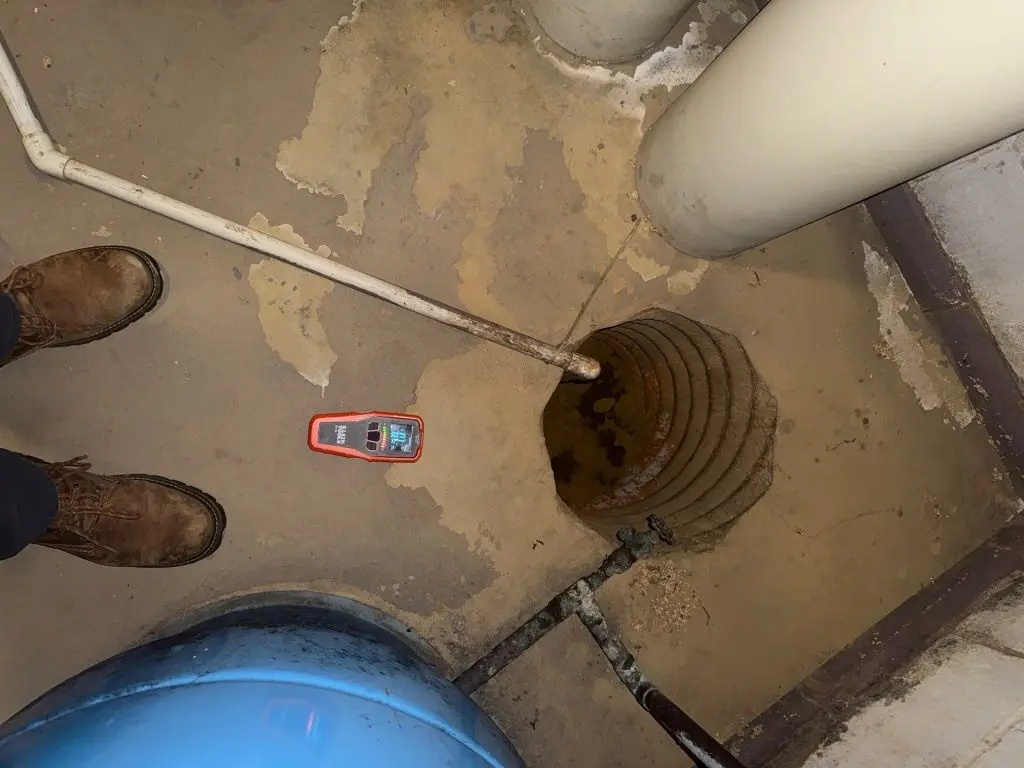
One of the most common reasons basements leak is hydrostatic pressure.
When prolonged rain, melting snow, or poor exterior drainage saturates the soil surrounding a foundation, water pressure increases against basement walls and beneath the concrete slab. Once enough pressure builds, water can move through cracks, joints, porous masonry, and other vulnerable areas.
Common entry points include:
- The cove joint: The seam where the basement floor meets the foundation wall.
- Foundation cracks: Small cracks can become pathways for groundwater during periods of heavy saturation.
- Porous masonry: Concrete block, poured concrete, brick, and mortar can absorb and transfer moisture.
- Basement floor cracks: Groundwater pressure beneath the slab can force moisture upward.
- Foundation penetrations: Pipes, utility openings, and improperly sealed penetrations can allow water to enter.
Repeated moisture can also contribute to musty odors, staining, efflorescence, elevated humidity, deterioration of building materials, and conditions that support mold growth.
If cracking accompanies the water problem, it is also worth having the foundation evaluated. HealthyWay provides professional foundation repair in New Jersey for homes experiencing cracks, settlement concerns, bowing walls, and related structural issues.
Interior vs. Exterior Basement Waterproofing: What Is the Difference?
Interior and exterior waterproofing address groundwater from different sides of the foundation.
1. Interior Drainage Systems
An interior drainage system is designed to collect and redirect groundwater before it can spread across the basement floor.
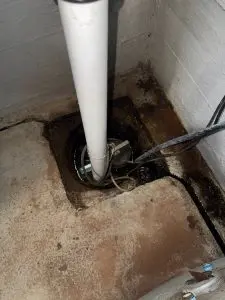
A common installation uses a perimeter drainage channel or interior French drain beneath the edge of the basement slab. Water entering near the foundation wall or beneath the floor is directed toward a sump system, where it can be pumped safely away from the home.
Depending on the property, the waterproofing system may incorporate:
- Interior perimeter drainage
- Drain tile
- Wall drainage or vapor-control components
- Sump pump systems
- Battery backup protection
- Discharge piping
HealthyWay also provides dedicated sump pump services for properties that need reliable groundwater removal and basement flood protection.
Interior waterproofing is often appropriate for:
- Water entering at the wall-floor joint
- Groundwater beneath the basement slab
- Recurring leaks after heavy rain
- Basements with limited exterior access
- Homes where major excavation would be impractical
- Properties that need an active drainage and sump system
One of its biggest advantages is that the work can generally be completed without excavating landscaping around the entire home.
2. Exterior Waterproofing and Foundation Drainage
Exterior waterproofing approaches the problem from outside the foundation.
Depending on the home and source of the leak, work may involve excavating soil next to the foundation, exposing the exterior wall, repairing defects, installing waterproofing or drainage materials, and improving drainage near the footing.
Exterior work can be appropriate when water is affecting the exterior foundation wall or when access to the foundation is necessary for additional repairs.
However, it typically involves substantially more disruption because landscaping, patios, walkways, decks, driveways, or other improvements may be located next to the foundation.
Exterior waterproofing may be considered for:
- Deteriorated exterior foundation surfaces
- Certain foundation wall defects
- Drainage failures around the exterior footing
- New construction or major renovation projects
- Situations where exterior foundation access is already required
Interior vs. Exterior Waterproofing Comparison
| Feature | Interior Drainage System | Exterior Waterproofing |
|---|---|---|
| Primary Purpose | Collects and redirects groundwater entering around or beneath the foundation | Helps prevent water from reaching or penetrating the exterior foundation wall |
| Hydrostatic Pressure Beneath Slab | Can help manage groundwater beneath the basement floor | Primarily addresses exterior foundation conditions |
| Excavation Required | Usually limited to interior perimeter work | Typically requires exterior excavation |
| Impact on Landscaping | Minimal | Can be significant |
| Sump Pump Integration | Common | May still require additional drainage or pumping depending on conditions |
| Best Application | Recurring groundwater intrusion, cove-joint leaks, sub-slab water | Exterior wall deterioration, drainage defects, major exterior foundation work |
Neither method should automatically be considered the correct solution for every basement. A professional inspection should identify where the water is entering and what is creating the pressure before a system is selected.
What Is the Best Basement Waterproofing Solution for a New Jersey Home?
For many homes experiencing recurring groundwater intrusion, an interior drainage and sump pump system can provide an effective way to control water without excavating the entire exterior foundation.
However, the best approach depends on the property.
A basement with water entering at the cove joint may need a different solution than a home with a leaking foundation crack, damaged exterior masonry, or structural wall movement.
That is why HealthyWay evaluates the source of the water rather than simply covering the visible symptom.
The company provides basement waterproofing, crawl space solutions, foundation repair, mold remediation, and related moisture-control services throughout a broad New Jersey service area. HealthyWay currently serves communities across Bergen, Burlington, Essex, Hudson, Hunterdon, Mercer, Middlesex, Monmouth, Morris, Ocean, Passaic, Somerset, Sussex, Union, and Warren counties.
You can also view HealthyWay’s complete New Jersey service area to see where our team works.
Why Choose HealthyWay for Basement Waterproofing in New Jersey?
Basement water problems are rarely identical from one property to another. Foundation type, grading, groundwater conditions, drainage, existing sump systems, cracks, and previous repairs can all influence the appropriate solution.
HealthyWay’s team evaluates these conditions before recommending a waterproofing plan.
The existing Service Areas page also highlights that HealthyWay provides multiple related services under one company—including basement and crawl space waterproofing, mold remediation, foundation and structural repair, and water damage services—allowing moisture and structural concerns to be evaluated together when necessary.
That is particularly useful when a basement problem involves more than just visible water. For example, prolonged moisture may also require professional mold remediation or foundation repairs.
Frequently Asked Questions About Basement Waterproofing in New Jersey
Can a leaking basement be fixed from the inside?
Yes. Many basement leaks can be managed with an interior drainage system that collects groundwater near the perimeter of the foundation and directs it toward a sump pump. The correct solution depends on the location and cause of the water intrusion.
Is interior or exterior basement waterproofing better?
Neither method is automatically better for every home. Interior systems are often effective for managing groundwater and hydrostatic pressure beneath the basement floor, while exterior waterproofing may be appropriate when exterior foundation walls or drainage systems need repair. An inspection can determine which approach fits the property.
Why does water come into my basement where the wall meets the floor?
This area is called the cove joint. During heavy rain or periods of high groundwater, hydrostatic pressure beneath and around the foundation can force water through this joint. Interior perimeter drainage is commonly used to capture this water before it spreads across the basement.
Do I need a French drain or a sump pump for a wet basement?
Many waterproofing systems use both. The drainage system collects groundwater and directs it toward the sump basin, while the sump pump removes the collected water from the basement. You can also read HealthyWay’s guide to French drains vs. sump pumps for a more detailed comparison.
Can foundation cracks cause basement water leaks?
Yes. Some foundation cracks can allow groundwater to enter the basement, particularly during heavy rain. Cracks can have several causes, so the foundation should be inspected if you notice recurring water intrusion, widening cracks, horizontal cracks, bowing walls, or other signs of movement.
Can basement moisture lead to mold?
Persistent moisture and elevated humidity can create conditions that support mold growth. Waterproofing the source of the moisture is therefore an important part of long-term prevention. If mold is already present, HealthyWay also offers professional mold remediation services.
How do I know where my basement water is coming from?
Look for where moisture first appears—such as a wall crack, cove joint, floor crack, window opening, or plumbing penetration—but keep in mind that the visible water may not always be directly below the actual source. A basement waterproofing inspection can help distinguish groundwater intrusion from foundation, drainage, plumbing, or condensation problems.
Does HealthyWay provide basement waterproofing near me in New Jersey?
HealthyWay serves homeowners across 15 New Jersey counties, including Bergen, Burlington, Essex, Hudson, Hunterdon, Mercer, Middlesex, Monmouth, Morris, Ocean, Passaic, Somerset, Sussex, Union, and Warren. You can check the full HealthyWay service area or contact the team to confirm service in your community.
Stop Basement Water Before the Next Heavy Rain
A basement leak may start as a small wet spot, but recurring groundwater can lead to damaged finishes, persistent humidity, mold-friendly conditions, and more complicated foundation problems over time.
The most important step is determining why the water is entering before choosing how to stop it.
HealthyWay Waterproofing & Mold Remediation LLC provides professional basement waterproofing throughout Northern, Central, and coastal New Jersey, with solutions designed around the conditions of each home.
Whether your basement is leaking through the cove joint, foundation walls, cracks, or floor—or your existing sump pump can no longer keep up—our team can inspect the problem and recommend the appropriate drainage, waterproofing, or foundation solution.
Ready to find the source of your basement leak?
Request a Basement Waterproofing Inspection →
Or call (732) 936-1111 to speak with HealthyWay about basement waterproofing in your New Jersey community. The current Service Areas page lists this number as the primary call-to-action phone number.