
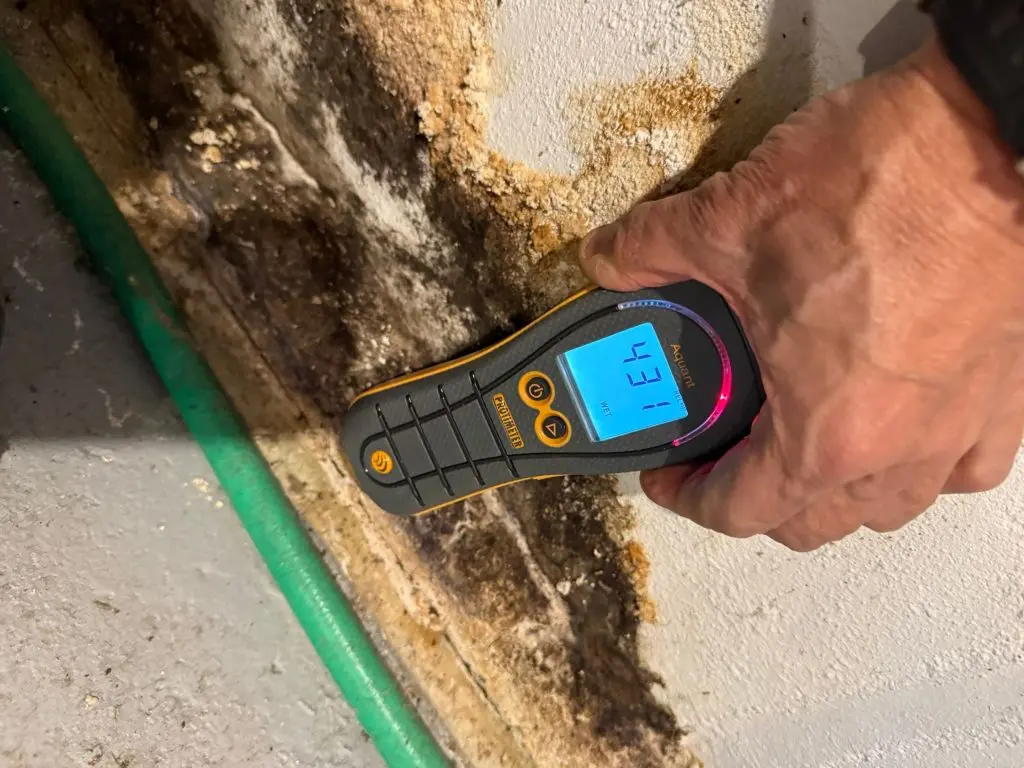
Finding mold in your basement, attic, or crawl space is stressful. Most New Jersey homeowners who spot growth or notice a damp odor ask the same question: what actually happens when a professional crew comes into my home? This guide walks through each phase of the remediation process, from the moisture investigation to the final check, along with how long the work can take and whether you can stay home while it happens.
Mold Removal vs. Mold Remediation
Before walking through the steps, it helps to separate two terms that are often used interchangeably: mold removal and mold remediation.
Understanding mold removal vs. mold remediation starts with one fact: mold spores are naturally present in indoor and outdoor air, so removing every spore from a home isn’t realistic. The problem begins when leaks, high humidity, or foundation seepage keep materials damp long enough for mold to grow on drywall, carpet, or wood framing.
Mold removal usually means taking off visible growth. If the moisture source remains, mold can grow back on the same surfaces. Professional mold remediation goes further: it finds and addresses the moisture source, contains the work area to protect clean spaces, removes damaged porous materials, cleans and filters the air, and confirms the area is dry.
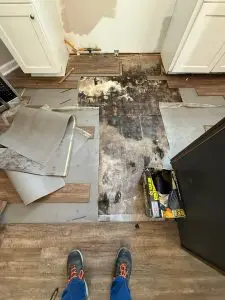
This approach follows guidance from the U.S. Environmental Protection Agency (EPA). In A Brief Guide to Mold, Moisture and Your Home, the EPA explains that the key to mold control is moisture control: if you clean up mold but don’t fix the water problem, the mold will most likely come back. For a closer look at why quick DIY cleanups often fall short, read our article on why bleach alone often fails.
Step-by-Step: The Mold Remediation Process
Professional mold remediation generally follows a set sequence designed to address active growth while protecting the rest of your living space.
Inspection and Moisture-Source Investigation
The mold remediation process begins with an inspection that looks beyond visible growth to find where the water is coming from. Moisture meters and similar tools help locate dampness hidden behind finished walls, under subfloors, or inside ceiling cavities.
Moisture intrusion typically stems from one of four primary culprits:
- Active Leaks: Burst pipes, leaking roof flashings, or faulty appliance drain lines.
- Groundwater Seepage: Hydrostatic pressure pushing groundwater through porous concrete foundation walls or floor slabs.
- Elevated Relative Humidity: Uncontrolled indoor humidity exceeding 60%, creating condensation on cold structural surfaces.
- Condensation: Temperature differentials on uninsulated ductwork or exterior walls.
When the source is below grade, the work often overlaps with basement mold remediation and foundation seepage control.
Containment
Before cleaning or demolition begins, the work area is isolated. Disturbing moldy materials releases spores, and without isolation, the HVAC system or normal air movement could carry them into clean rooms.
Containment typically uses plastic sheeting around the work zone and sealed supply and return vents. On many projects, equipment keeps the area under negative air pressure, so air flows into the work zone rather than out of it.
Removing Damaged Porous Materials
Once containment is fully secured, technicians evaluate structural and finishing materials within the space. The protocol varies significantly depending on material porosity:
- Porous Materials: Materials like drywall, fiberglass insulation, carpeting, padded underlayments, and ceiling tiles absorb moisture and fungal hyphae roots deeply into their core. Once heavily contaminated, these items usually cannot be completely sanitized and must be carefully cut out, double-bagged in heavy plastic under containment, and safely disposed of.
- Hard & Non-Porous Materials: Solid framing timbers, subfloor joists, poured concrete, block foundations, tile, and metal fixtures can often be preserved and thoroughly cleaned using specialized physical scrubbing, wire brushing, or targeted media techniques.
Cleaning and HEPA Filtration
After damaged porous materials are removed, the remaining hard surfaces are cleaned to remove mold growth and residue.
Air scrubbers with High-Efficiency Particulate Air (HEPA) filters are commonly used inside the containment area to capture airborne particles, and HEPA vacuums help remove settled dust from framing, concrete, and other hard surfaces.
Drying and Fixing the Moisture Problem
This step decides whether mold returns. Cleaning visible growth won’t last if framing or masonry stays damp. The Centers for Disease Control and Prevention (CDC) advises drying wet items within 24 to 48 hours to help prevent mold growth.
Dehumidifiers and air movers help dry framing and foundation walls inside the work zone. More importantly, the moisture source needs a lasting fix. Depending on where the water comes from, that may mean basement waterproofing to stop foundation seepage or Crawl Space services to control ground moisture under the house.
Checking the Results
After physical cleanup, antimicrobial treatment, and structural drying are complete, the job enters the verification phase. Technicians perform a thorough visual inspection to verify that all work areas are entirely free of visible mold, dust, and physical debris. They confirm that materials meet dry-standard readings and that no lingering musty odors remain in the space.
Some homeowners hire an independent environmental consultant or indoor air quality testing firm for formal post-remediation verification (clearance testing). This testing typically involves air or surface sampling to check conditions before the containment barriers come down.
How Long Does Mold Remediation Take?
A central question every homeowner asks when dealing with unexpected moisture issues is: how long does mold remediation take from start to finish?
There is no fixed number of days that applies to every job. The timeline depends on several site-specific factors:
- Size of the Affected Area: A localized containment zone around a small plumbing leak takes far less time to address than a full basement or entire unencapsulated crawl space.
- Types of Building Materials: Tearing out multiple layers of finished drywall, trim, subflooring, and carpet requires more time than treating bare, exposed floor joists in an unfinished basement.
- Hidden Growth: If technicians uncover hidden fungal growth behind walls or under subfloors during demolition, the scope of work and containment zone must expand accordingly.
- Structural Drying Time: Deeply saturated structural timbers, thick subflooring, or concrete masonry walls may require several days of continuous industrial dehumidification to reach safe equilibrium moisture content.
- Repairs to the Moisture Source: If fixing the root cause requires exterior drainage work, foundation wall crack repairs, or major plumbing retrofits, those structural fixes add to the overall project schedule.
During your initial consultation and site evaluation, your remediation team will outline an estimated schedule based on your property’s specific physical conditions and drying needs.
Can You Stay Home During Mold Remediation?
Another common concern is whether your family can stay home while the work is underway.
On many residential projects, homeowners are able to stay in the home during the work. Sealed containment under negative air pressure helps keep spores, dust, and cleaning agents within the work area and limits their spread to the rest of the house.
However, whether staying home is practical for your family depends on several clear variables:
- Location & Access: If remediation is contained strictly within an isolated area like an attic, an unfinished basement, or an exterior-access crawl space, day-to-day disruption to your main living space is minimal. However, if the work zone blocks access to essential areas like your primary kitchen or your home’s only functional bathroom, staying on-site becomes difficult.
- Equipment Noise: Negative air machines, air scrubbers, and industrial dehumidifiers operate 24 hours a day during the project to maintain air filtration and drying standards. The continuous fan noise can disrupt light sleepers or people who work from home.
- Health Sensitivities: Anyone in your household with severe asthma, environmental allergies, chronic respiratory illnesses, or a weakened immune system should exercise extra caution. Individuals with elevated health risks should always consult their personal physician for medical guidance on whether relocating during active building work is advisable for their specific condition.
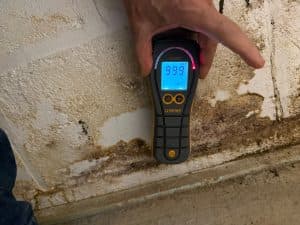
Talk through your routine, home layout, and any health concerns with your remediation contractor before work begins.
When to Call a Professional Instead of Cleaning It Yourself
Handy homeowners may be tempted to grab a bucket of household cleaner and tackle mold growth as a DIY weekend project. However, attempting DIY cleanup on substantial mold problems often scatters spores throughout the house or fails to address underlying structural dampness.
You should step back and contact a professional mold remediation company when facing any of the following scenarios:
- Mold Covering More Than About 10 Square Feet: The EPA advises consulting its detailed remediation guidance when mold growth covers more than 10 square feet or there has been a lot of water damage. Larger areas typically call for containment and specialized equipment.
- Repeated or Recurring Growth: If mold keeps returning to the same wall, ceiling corner, or floor joist after you clean it, there is likely an unaddressed moisture issue that needs a professional diagnosis.
- HVAC System Involvement: If you suspect mold is growing inside your home’s central heating, ventilation, and air conditioning (HVAC) ductwork, don’t run the system or try to scrub the ducts yourself. Contaminated HVAC systems require specialized equipment to clean without blowing spores into every room.
- Hidden Mold: If your home has a history of water damage, unexplained musty odors, or warping floors but no visible growth, mold may be growing out of sight inside wall cavities, subfloors, or pipe chases.
- Contaminated Water Sources: If the moisture intrusion was caused by sewage backups, rising floodwaters, or contaminated drain water (Category 3 black water), the area poses severe biological hazards that demand professional containment, sanitization, and specialized protective gear.
Talk to HealthyWay About Mold in Your Home
At HealthyWay Waterproofing & Mold Remediation LLC, we understand that finding mold in your home is stressful. Serving homeowners and commercial property managers throughout Central and Northern New Jersey since 2007, we focus on more than visible growth: we find where the water is coming from and recommend moisture-control solutions to help keep your basement, attic, or crawl space dry.
Take the First Step Toward a Dry, Healthy Home
Seeing signs of mold or a musty smell that won’t go away? Call HealthyWay at (732) 741-1103 or schedule a mold evaluation.
Unsure whether your home’s moisture symptoms require a full service evaluation? Try our quick, free online Mold Risk Checkup to assess your property’s environmental risk factors in just a few clicks.